
Airports & Aviation Hubs
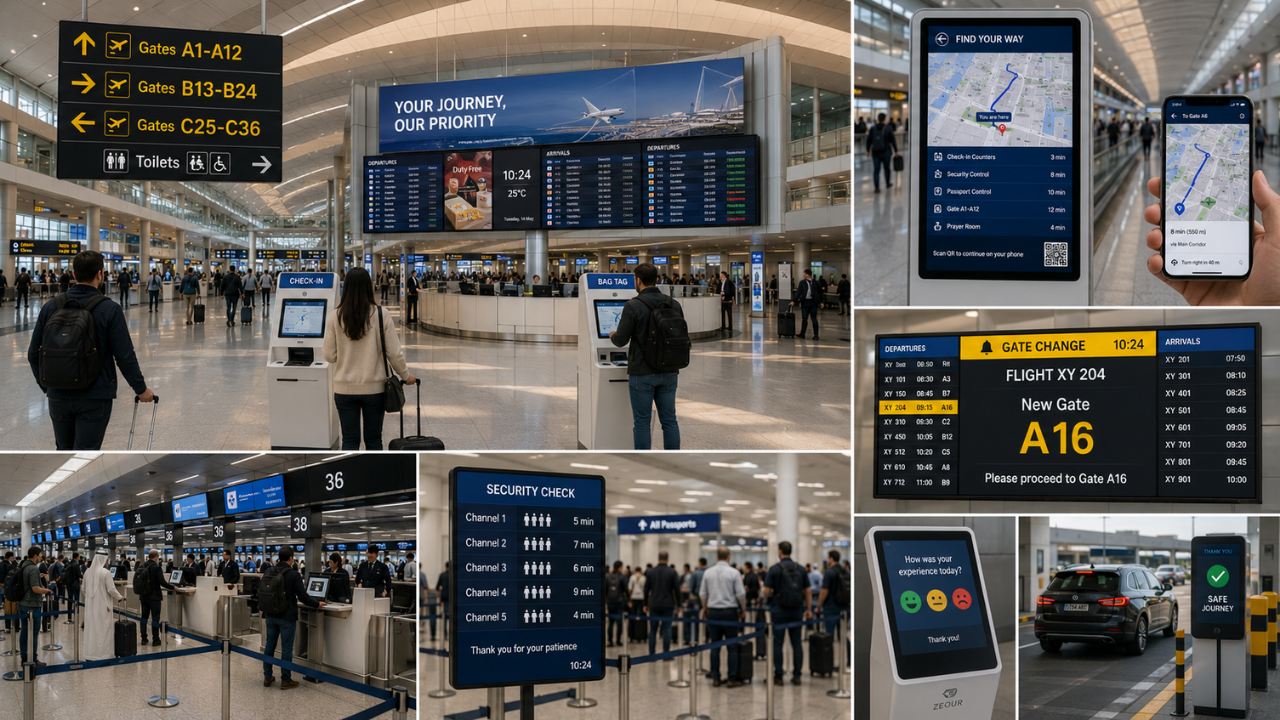
Multi-terminal wayfinding with sub-minute path planning, gate-change signage pushed across the estate in five seconds, queue management at security and immigration, and parking exit in sub-5s. Built for the operational realities of GCC + MENA aviation hubs.
Production references
What Zeour deployments deliver for airports operators.
Emergency-broadcast layer bypasses scheduling and pushes to every screen via Socket.IO with priority.
Floor-graph BFS for lifts / stairs / escalators; PiP floor switching on the mobile companion.
RFID + LPR fallback; sovereign on-prem licensing; Android Compose kiosk fleet with barrier-gate GPIO.
Video, image, YouTube, weather, clock, RSS, QR, social, countdown, data viz — composable per-screen.
The four problems we hear from airports buyers in every Discovery.
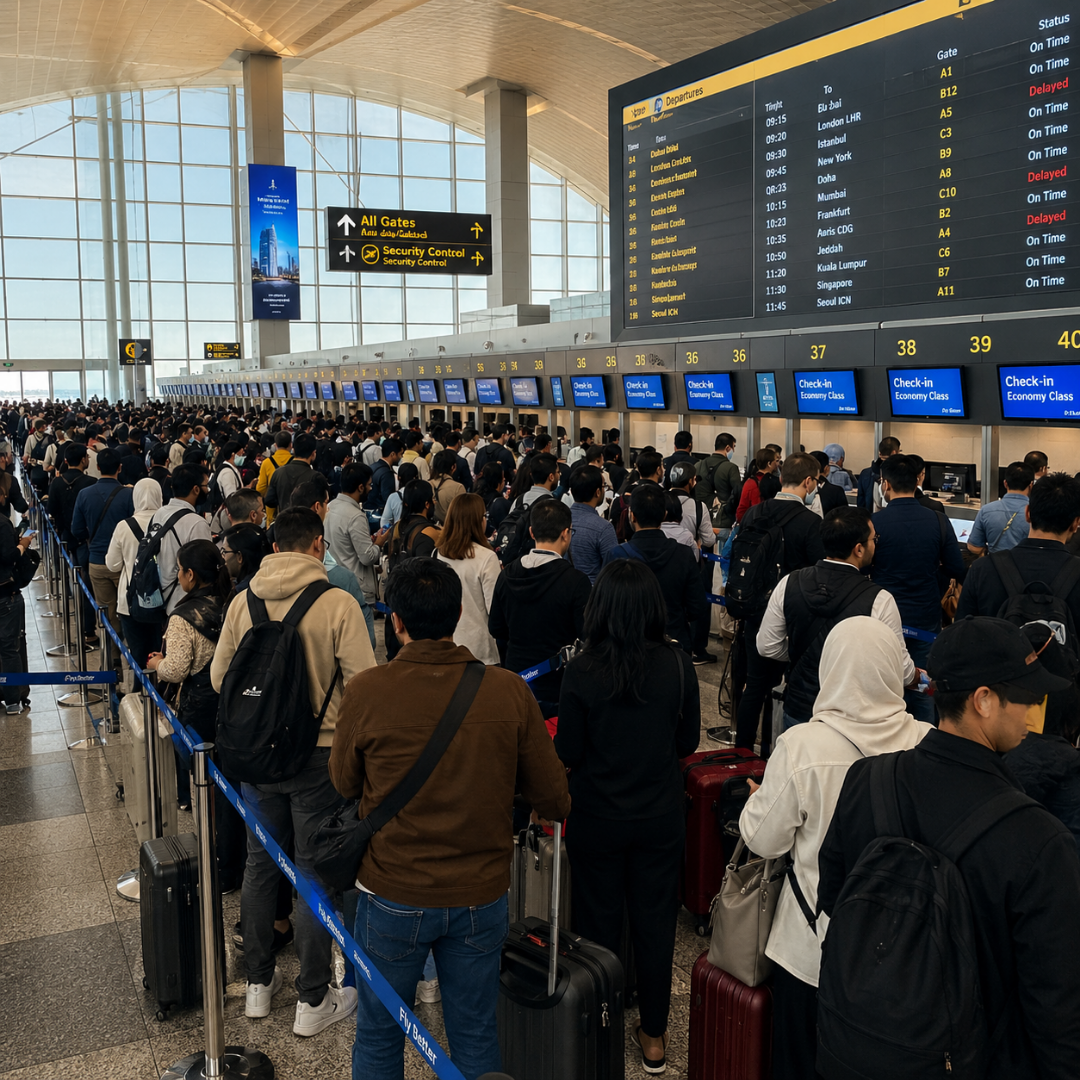
Gate changes lose passengers
A last-minute gate change pushed to old signage 8 minutes after it's announced is the dominant complaint vector at every regional airport. Five-second propagation across every screen in the terminal is table-stakes.
Multi-terminal wayfinding without mobile is unworkable
Modern hubs are too large to navigate from a single signage map; the kiosk-to-mobile handoff with a 30-minute secure session is the design pattern that actually works for the passenger walking 600m to a far gate.
Retail concessions, security, immigration are different queue domains
A single queue platform that handles security (high-velocity, predictable), immigration (regulated, sometimes biometric), and retail concessions (variable, mall-style) is rare. Most airports cobble together three different vendors.
Parking exit is the negative anchor of the trip
A slow parking exit at 11pm after a long-haul flight is the negative anchor of the entire passenger experience. Sub-5s exit via RFID + LPR is the modern target.
Solutions deployed in airports today.
Every solution below is in production with at least one airports operator. Click any card for the full deep-dive.
Concrete deployment scenarios.
Passenger wayfinding — landside to airside
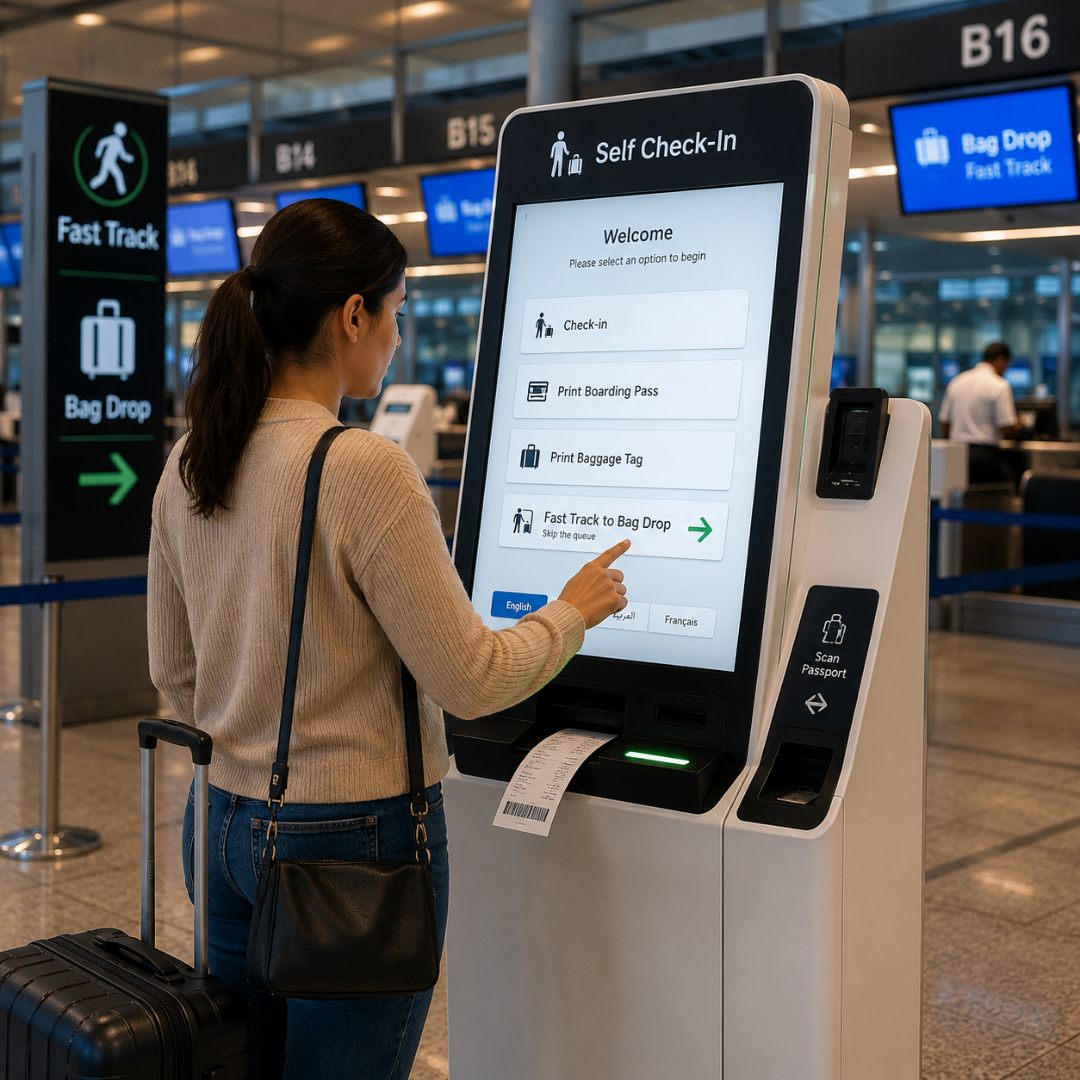
Arriving passenger uses kiosk at landside; route covers check-in counter, security, immigration, retail concession, gate; QR handoff transfers to mobile with 30-minute secure session; route updates if a gate changes.
Gate-change emergency broadcast
Operations triggers a gate-change push; every screen in the terminal updates within 5 seconds; signage at the old gate displays the new gate prominently; relevant lounges and retail displays update simultaneously.
Security queue with biometric verification
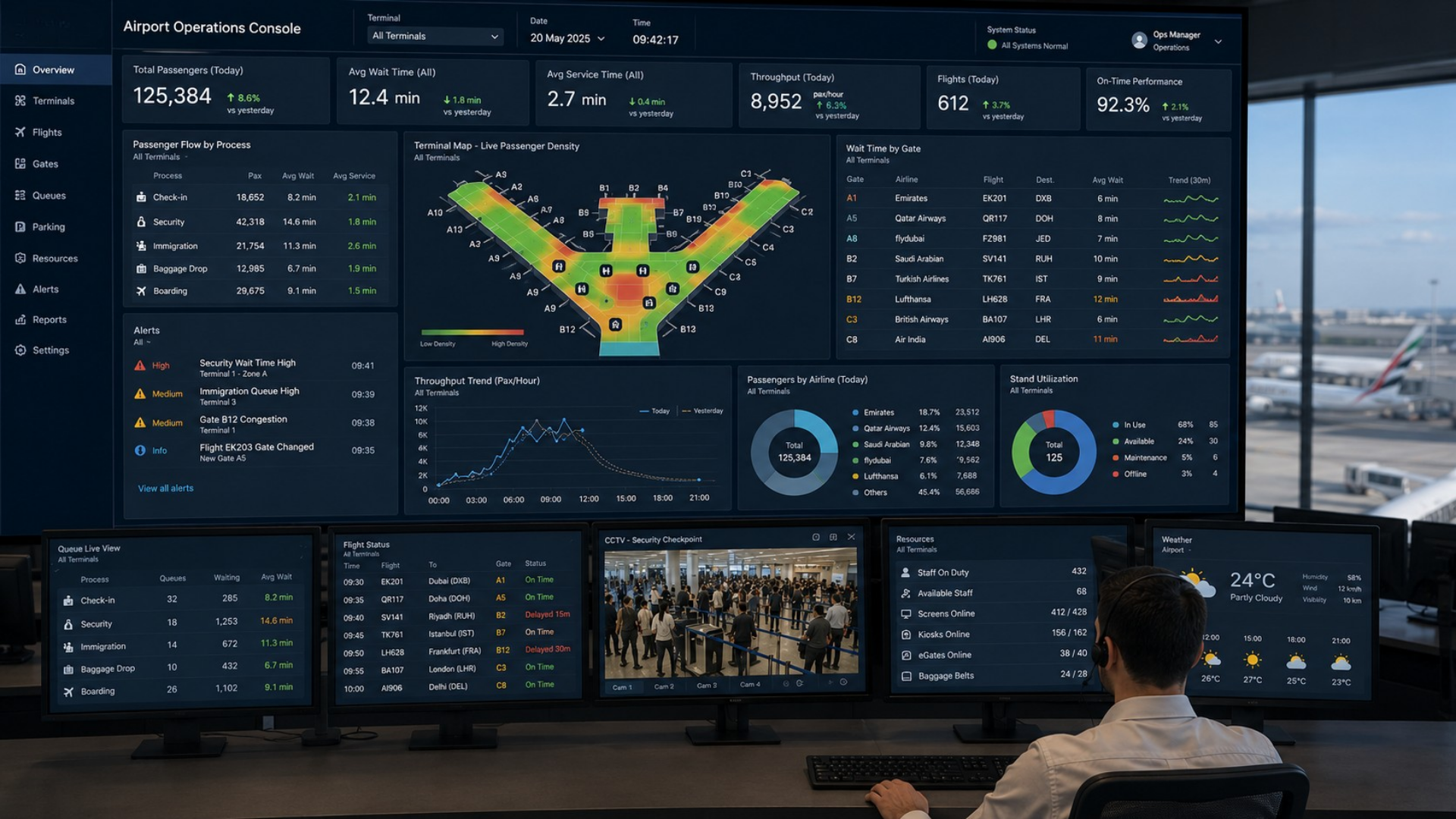
Security queue management with per-channel throughput tracking; integration with the biometric verification layer where in production; predicted wait visible at the queue entry for staff redeployment decisions.
Long-stay parking with RFID + LPR
Frequent flyers issued RFID cards; casual parking handled via LPR; revenue reconciliation per parking lot per month; integrated with the airport's loyalty programme where in production.
Deep dive — Zeour engineering for the airports reality.
Why airport signage needs a different architecture from mall signage
Airport signage looks like mall signage from the outside — many screens, multi-tenant, real-time updates. The operational reality is very different. A mall emergency broadcast is rare; an airport gate-change push happens hundreds of times a day. A mall screen failing for 30 seconds is annoying; an airport screen failing during a boarding-call push is a regulator visit. GRAVIA is built for the airport operational tempo: every screen has a SmartPlay fallback chain (if the primary playlist fails, the player walks the chain until something renders); the HealingVideo HLS fallback handles network blips without going to black; the emergency-broadcast layer bypasses normal scheduling and pushes via Socket.IO with priority. Sub-5-second propagation across every screen in the terminal is the SLA; we routinely hit sub-3 in production.
Wayfinding inside a multi-terminal hub
A modern airport is genuinely hard to navigate. The wayfinding kiosk at landside is the first point of contact; the QR handoff transfers the route to the passenger's mobile with a 30-minute secure session. Multi-floor pathfinding handles escalators, lifts and corridors; PiP floor switching shows the passenger which level they're on relative to the destination. Floor-graph BFS handles the lift / stairs decision (we always prefer the lift for accessibility unless the user opts out); client-side Dijkstra with polygon wall-collision handles the visual path on the kiosk. The advisory floor / kiosk locks with heartbeat coordinate edits across the facilities team. GDPR-compliant zero-PII telemetry — no per-passenger tracking, only aggregated heatmaps and most-searched POIs.
Three queue domains, one platform
Security, immigration and retail concessions are operationally different but commercially adjacent. Security needs high-velocity throughput tracking per channel for staffing decisions in real time. Immigration needs integration with biometric verification (and the regulatory documentation that comes with it). Retail concession queues — coffee shop, duty-free service counter, lounge check-in — are mall-style. GLARUS handles all three with per-domain configuration: service-type definitions in MSA / GLITT, branch-level execution in EMS, virtual queueing in MobileWCSA where appropriate, signage and queue boards in GRAVIA. The same CIO console gives operations a single view across all three.
Parking is the last impression
A passenger arriving at 11pm after a long-haul flight is in no mood for a slow parking exit. Smart Parking ships an Android Compose kiosk fleet driving ICT104U card readers, barrier-gate GPIO and hardware watchdog via the smdt SDK — either through TGW UDP Gateway or directly via /dev/ttyS native serial control. RFID is the primary pattern (frequent flyers / staff); LPR is the fallback (casual parking). Sub-5-second leave at exit is the SLA. Sovereign on-prem licensing — RSA-SHA256 signed to specific server MAC addresses, no SaaS phone-home. Multi-tenant by design where a parking concession is leased to a separate operator.
Regional notes — what changes per market.
United Kingdom + European Union
GDPR + UK DPA 2018, integration with FIDS systems, sovereign on-prem option for airport authorities that require data inside the perimeter.
Americas
Integration with carrier and concession systems scoped per engagement; sovereign on-prem option for hub operators that require it.
GCC + MENA
RTL Arabic shipping in the same build as English, integration with national e-gate biometric systems where in production, PDPL alignment, sovereign on-prem deployment with no SaaS phone-home.
Africa + Asia
Multilingual engineering — extensible to any locale per engagement; integration with regional carrier systems; sovereign on-prem option for state-owned operators.

Compliance frameworks
- ICAO
- IATA passenger experience
- GDPR
- PDPL
- ISO 27001
- Aviation cybersecurity (ICAO Doc 8973)
Active regions
- · United Kingdom
- · European Union
- · Americas
- · GCC
- · MENA
- · Africa
- · Asia
Questions airports buyers always ask.
Airports deployments in production.
Talk to an engineer who has shipped this for airports.
A 30-minute scoping call with the team that builds and operates Zeour — not a generalist account exec. We’ll walk your branch / site / network profile and give you a fixed-fee Discovery price by the end of the call.
Airports — concepts you'll meet
Definitions for the operational terms that appear across this industry page.