
Parking Operators & Multi-Tenant Lots
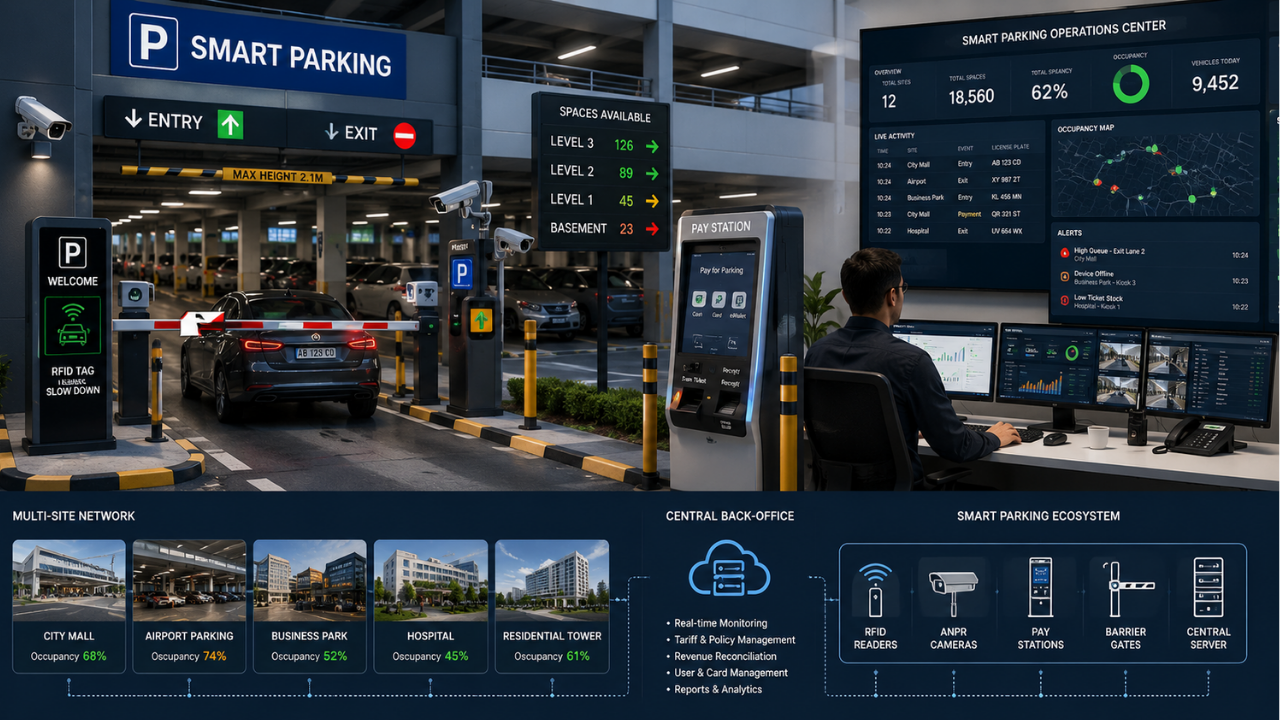
Sub-5-second exit, RFID card lifecycle, sovereign on-prem deployment with no SaaS phone-home, Android Compose kiosk fleet driving barrier gates via GPIO. Built for sovereignty-sensitive markets as the production baseline; re-localisable to any market — UK / EU / Americas / GCC / MENA / Africa / Asia — in days.
Production references
What Zeour deployments deliver for parking operators.
RFID + barrier-gate GPIO + hardware watchdog via the smdt SDK.
Each deployment tied to specific server MAC addresses; tamper-evident; sovereign.
On-prem deployment runs fully air-gapped if required; updates via signed bundles only.
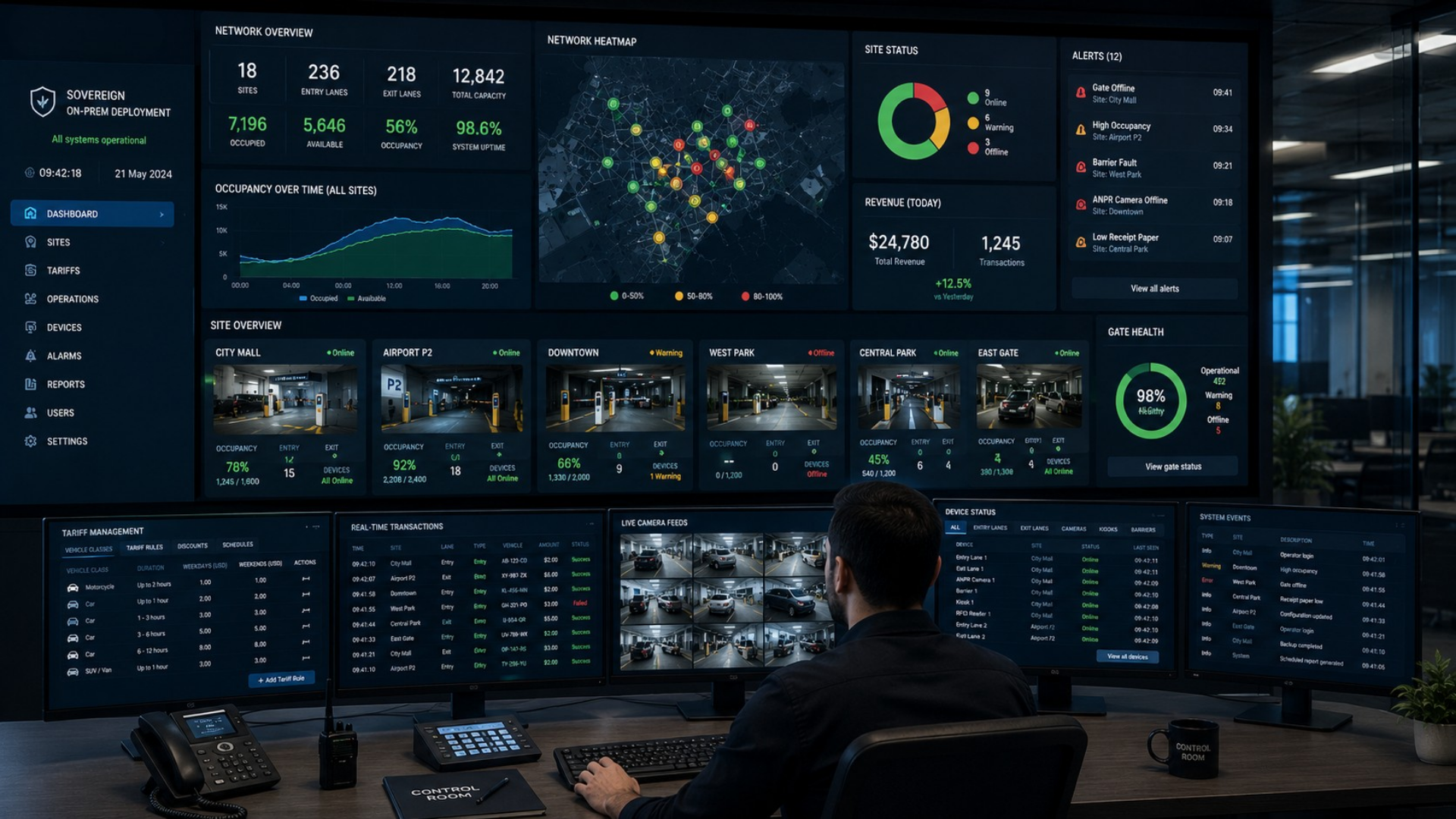
Live activity, transactions, parking alerts; admin operations centre with per-car-size pricing profiles.
The four problems we hear from parking buyers in every Discovery.
Card-and-cash chaos at exit
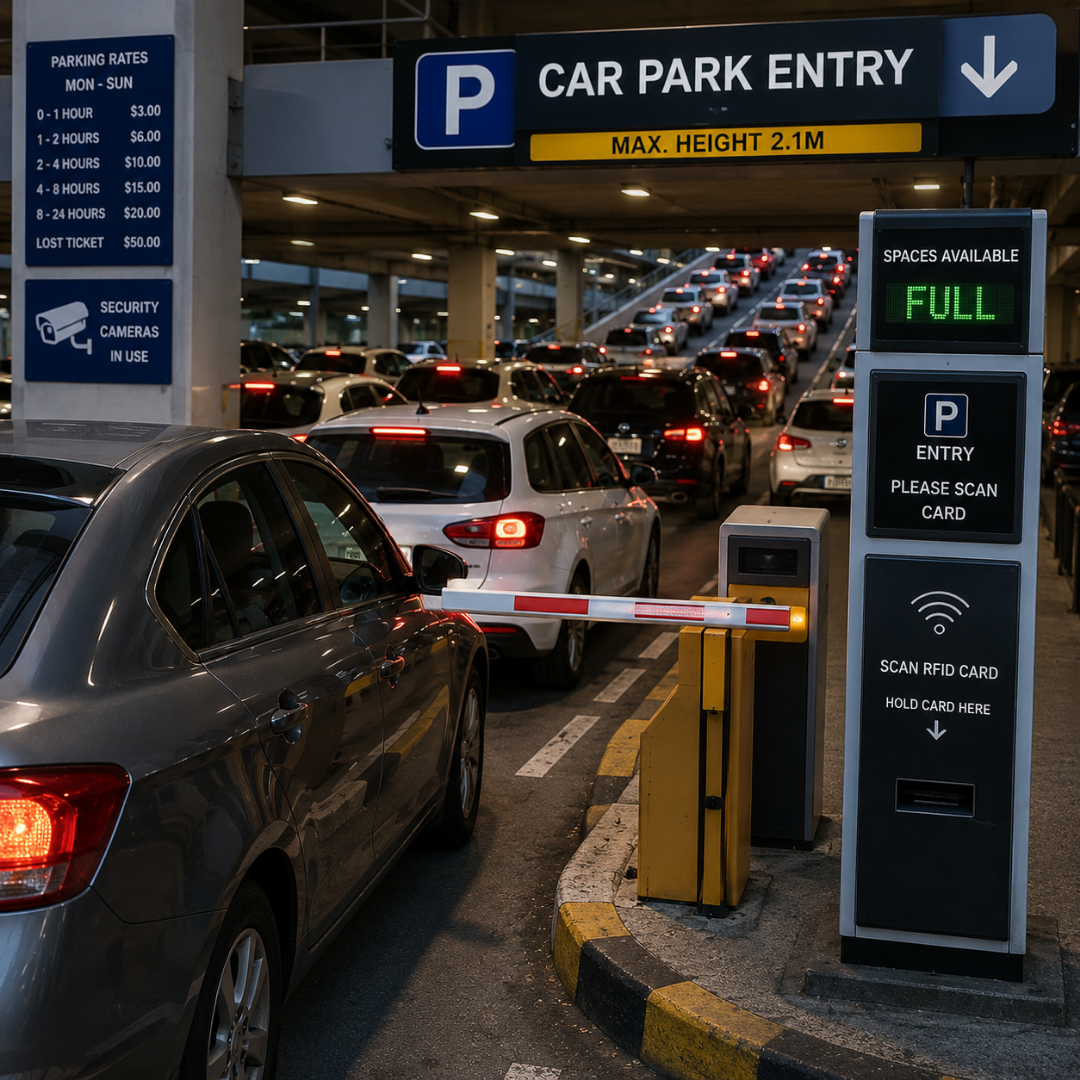
Mixed RFID + cash + card kiosks with inconsistent UX create the longest exit queues. Driver paying cash with no exact change is the typical Friday-evening mall scenario.
SaaS phone-home fails sovereignty review
Municipal lots, residential compounds and certain mall operators require sovereign on-prem deployment with no outbound network calls. RSA-signed offline licensing is the only deployment pattern that clears.
Multi-tenant lots need clean revenue splits
A shared lot serving a mall, hotel and office tower needs per-tenant revenue reconciliation, per-tenant pricing profiles, and per-tenant operator dashboards. Most parking platforms can't do this without bespoke work.
Hardware reliability is the real SLA
Kiosks live outside, get rained on, get kicked, lose power. A hardware-watchdog with auto-recovery is the difference between sub-5-second exit and a queue blocking the entire exit lane for an hour.
Solutions deployed in parking today.
Every solution below is in production with at least one parking operator. Click any card for the full deep-dive.
Concrete deployment scenarios.
Mall parking — RFID + LPR + cash fallback
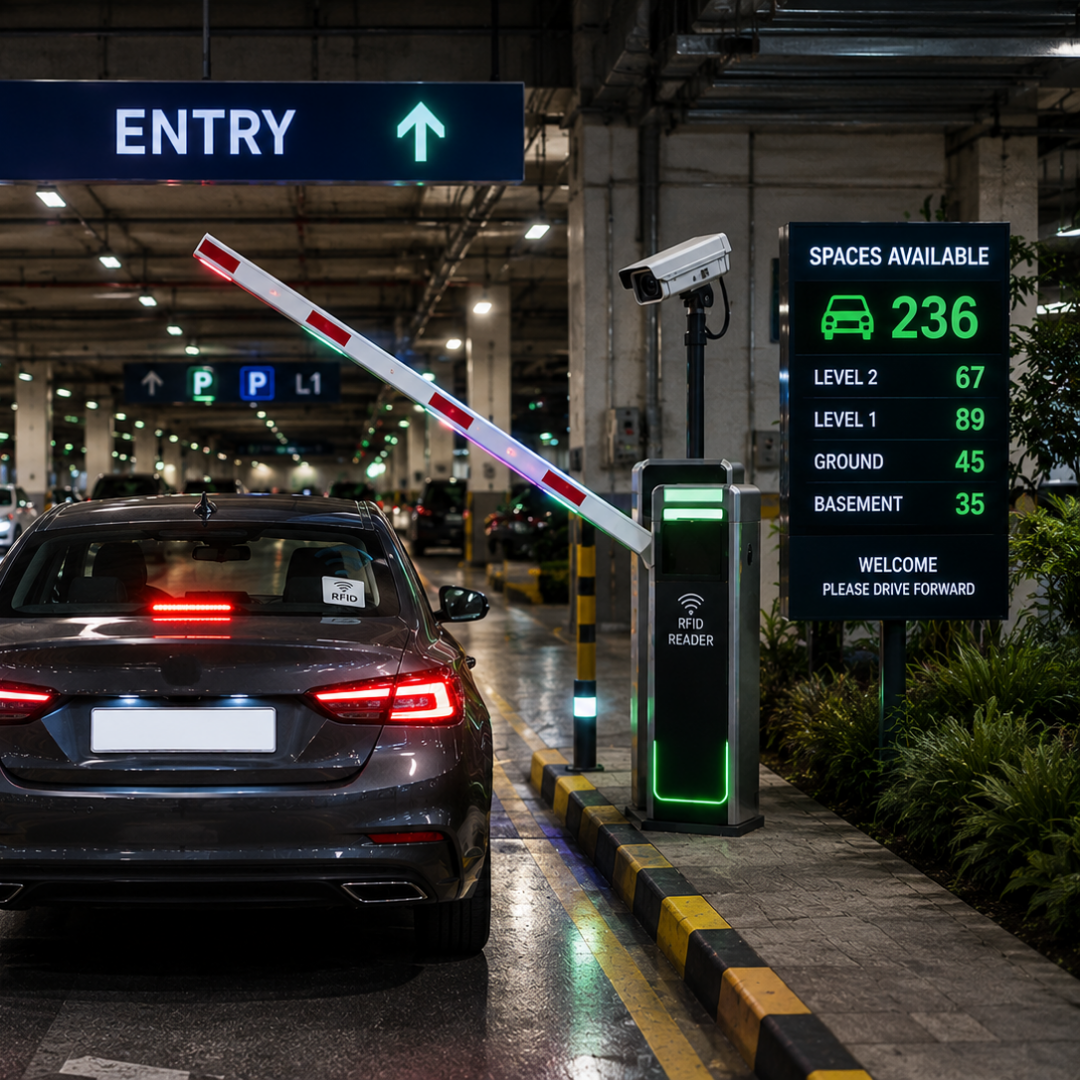
Staff and VIP shoppers issued RFID; casual shoppers handled via LPR + paid casual parking; cash fallback at attended booth; sub-5s exit for the RFID + LPR flows.
Office-tower parking with monthly subscriptions
Tenants pay monthly; RFID issued at lease signing; staff-card management console handles issue / top-up / transfer / lost-replacement / fixed-fee leave; per-tenant revenue reconciliation.
Residential compound — gated entry only
Compound residents issued RFID; visitor codes generated via host portal; visitor barrier opens for valid codes only; full audit trail; sovereign on-prem deployment.
Municipal lot — sovereign, multi-language
Municipal operator runs the lot fully on-prem with locale-aware UI, configurable currency formatting in receipts, customer self-service portal with no login required, per-vehicle audit trail.
Deep dive — Zeour engineering for the parking reality.
Why we built Smart Parking for hard-mode markets first
The hard-mode market for parking is the one where every assumption a SaaS vendor makes is wrong. The deployment site has flaky internet, regulatory pressure to keep data inside the country, multilingual citizens, configurable-currency receipts, and a mall operator that won't install anything that phones home. We built Smart Parking with these constraints as the production baseline — RTL Arabic UI, configurable currency, configurable phone-number formatting, sovereign on-prem licensing — because if it works in the hardest deployment context it works anywhere. Re-localising to UK, EU, Americas, GCC, MENA, Africa or Asia is a days-long change, not a months-long re-build. The Android Compose kiosk fleet, the RFID card lifecycle, the barrier-gate GPIO control, the hardware watchdog, the real-time Socket.IO monitoring — every layer is portable.
Sovereign on-prem licensing explained
Every deployment ships with an RSA-SHA256-signed licence tied to specific server MAC addresses. If you move the deployment to a different server, the licence breaks; if you tamper with the licence file, the application refuses to start; if your network is air-gapped, nothing breaks. There is no SaaS phone-home. Updates ship as RSA-signed bundles via a delivery channel the operator controls (SFTP, internal repository, USB transfer). This is the only deployment pattern that clears a strict national-data-residency review for municipal lots and certain residential compounds; it's also what we recommend for mall operators that want operational continuity even if their internet goes down.
The Android Compose kiosk fleet
The kiosk is an Android (Jetpack Compose) application driving ICT104U card readers, barrier-gate GPIO and hardware watchdog via the smdt SDK. Two control paths: TGW UDP Gateway for sites that prefer the gateway abstraction, or direct /dev/ttyS native serial control for sites that don't. Hardware watchdog reboots the kiosk on hang; the application restores its in-memory state from the central control plane; the barrier defaults to "closed" until the kiosk reports ready. Total exit-blocking failure case (kiosk hard-fails AND server unreachable) is a single attended-booth operator opening the gate manually; we instrument both events so the operator sees the alert.
Multi-tenant revenue reconciliation
A shared lot serving a mall + hotel + office tower has separate operators, separate pricing profiles, and separate revenue accountability. Smart Parking handles this with per-tenant configuration: each tenant has its own RFID card pool, its own per-car-size pricing profile, its own admin dashboard scope, and its own monthly revenue export. Cross-tenant audit trails are visible to the parent operator only. The customer self-service portal (no login required) lets drivers look up their own transactions without seeing anyone else's. Sovereign on-prem deployment makes this auditable in the operator's own perimeter.
Regional notes — what changes per market.
United Kingdom + European Union
GDPR + UK DPA 2018, sovereign on-prem option for municipal lots and residential compounds, configurable currency / phone-number formatting, integration with national toll-payment systems where in production.
Americas
On-prem deployment for municipal / private operators that require data residency, RFID + LPR fallback as the standard pattern, integration with toll-payment systems scoped per engagement.
GCC + MENA
VAT-aware billing, RTL Arabic shipping in the same build as English, integration with national toll-payment systems where in production for toll-style operators, sovereign on-prem option for compounds and municipal lots.
Africa + Asia
Sovereign on-prem default, mobile-money integration where in production, configurable currency / phone-number formatting, fully air-gappable.
Production reference: Iraq
Smart Parking was first deployed at a multi-tenant lot in Iraq — the engineering baseline that proved the sovereign on-prem licensing, RTL Arabic UI, Android Compose kiosk fleet and barrier-gate GPIO work in a hard-mode market. Re-localisable to any other market in days.

Compliance frameworks
- PCI DSS 4.0
- GDPR
- PDPL
- ISO 27001
Active regions
- · United Kingdom
- · European Union
- · Americas
- · GCC
- · MENA
- · Africa
- · Asia
Questions parking buyers always ask.
Talk to an engineer who has shipped this for parking.
A 30-minute scoping call with the team that builds and operates Zeour — not a generalist account exec. We’ll walk your branch / site / network profile and give you a fixed-fee Discovery price by the end of the call.
Parking — concepts you'll meet
Definitions for the operational terms that appear across this industry page.