
Oil, Gas & Energy
Site visitor management with contractor compliance, control-room signage with sub-5-second emergency override, sovereign on-prem AI for predictive-maintenance and operations co-pilot, and multi-site induction tracking. Sovereign on-prem deployment is the default — no outbound calls.
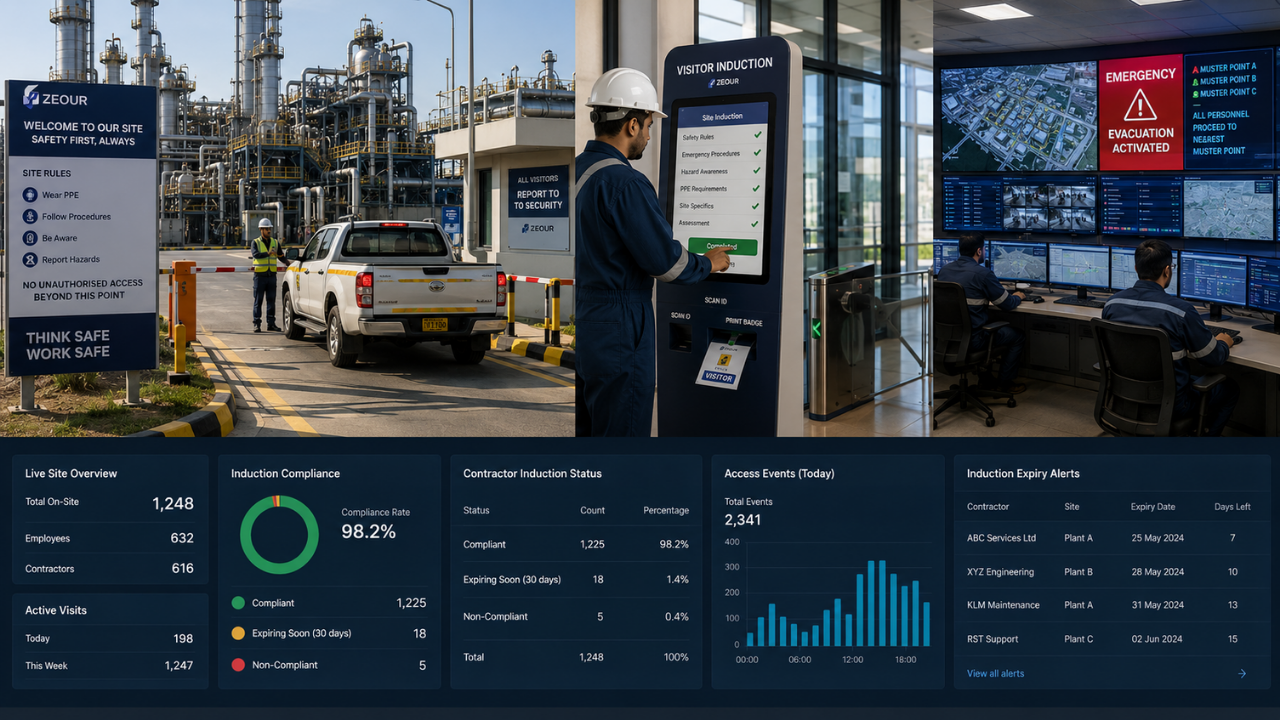
Production references
What Zeour deployments deliver for oil & gas operators.
Sovereign on-prem deployment runs fully air-gapped if required; RSA-signed licensing is offline-indefinite.
Bypasses normal scheduling; pushes via Socket.IO with priority across every screen.
Visitor management ties each contractor record to current induction status; gate refuses unhalt-induction contractors.
Open-weight (Llama / Mistral / Qwen / DeepSeek) via vLLM / Ollama / TGI on operator-owned GPUs (you procure, we size + validate + operate).
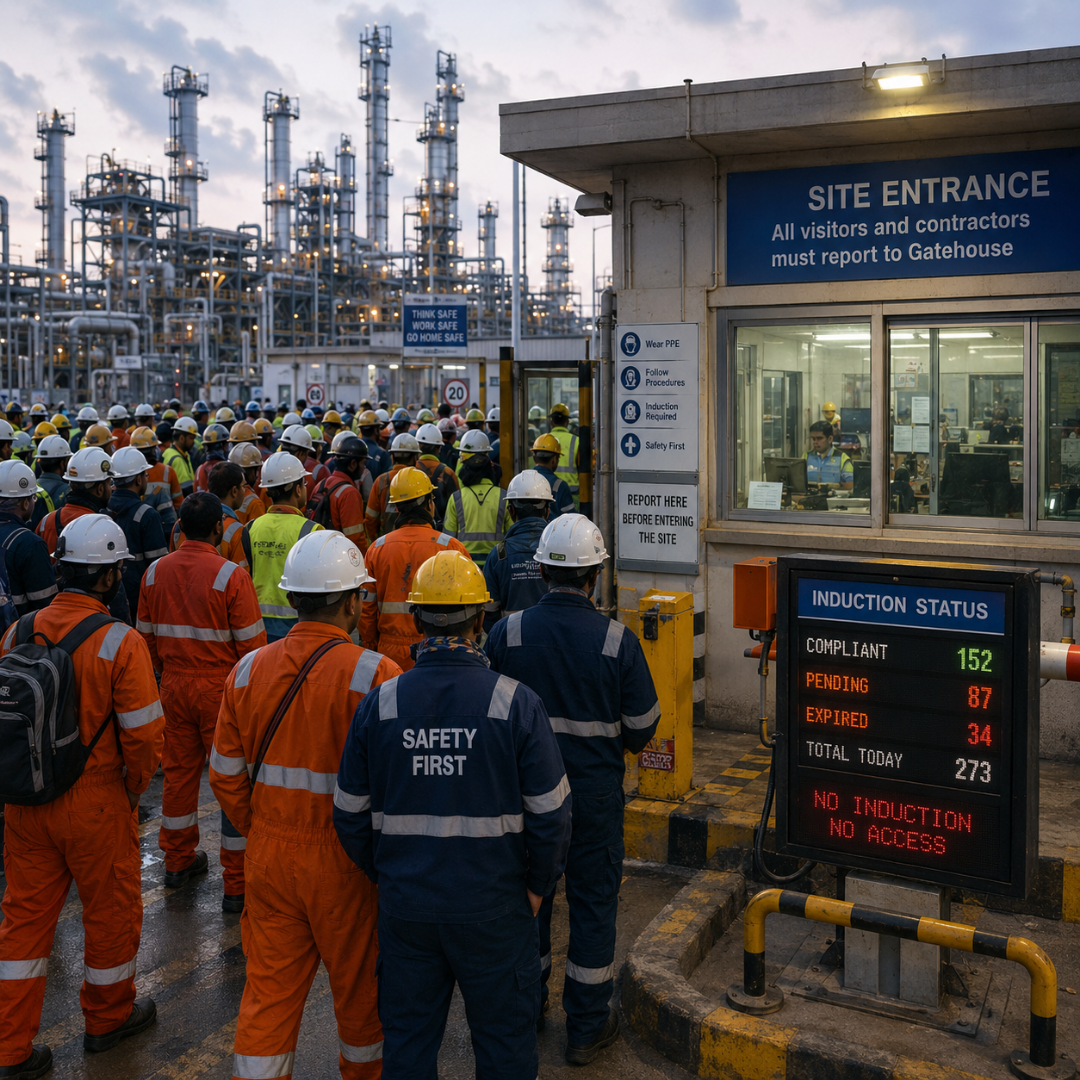
The four problems we hear from oil & gas buyers in every Discovery.
Contractor induction compliance is paper-bound
Site induction (OPITO BOSIET / FOET, equivalent regional certifications, site-specific safety briefings) is tracked on paper or in a spreadsheet at most operators. Visitor management with induction tracking changes this to a single source of truth.
Patient data, citizen data, operator data — all need sovereign on-prem
Upstream and downstream operators have the strictest data-residency requirements of any vertical. SaaS visitor / signage / AI systems that phone home fail procurement on day one. Sovereign on-prem with RSA-signed licensing is the only deployment pattern that clears.
Control-room signage and operations dashboards drift
Without per-team RBAC and a central CMS, control-room dashboards drift across shifts — different teams add different overlays, the safety officer can't override in 5 seconds, and the audit trail is broken.
AI value without sending data to a US-hosted API
Predictive maintenance, operations co-pilot, document-search across SOPs and engineering drawings — there is real AI value to capture. Doing it via OpenAI or Anthropic API is a compliance impossibility. On-premises LLMs running on the operator's own hardware are the only path.
Solutions deployed in oil & gas today.
Every solution below is in production with at least one oil & gas operator. Click any card for the full deep-dive.
Concrete deployment scenarios.
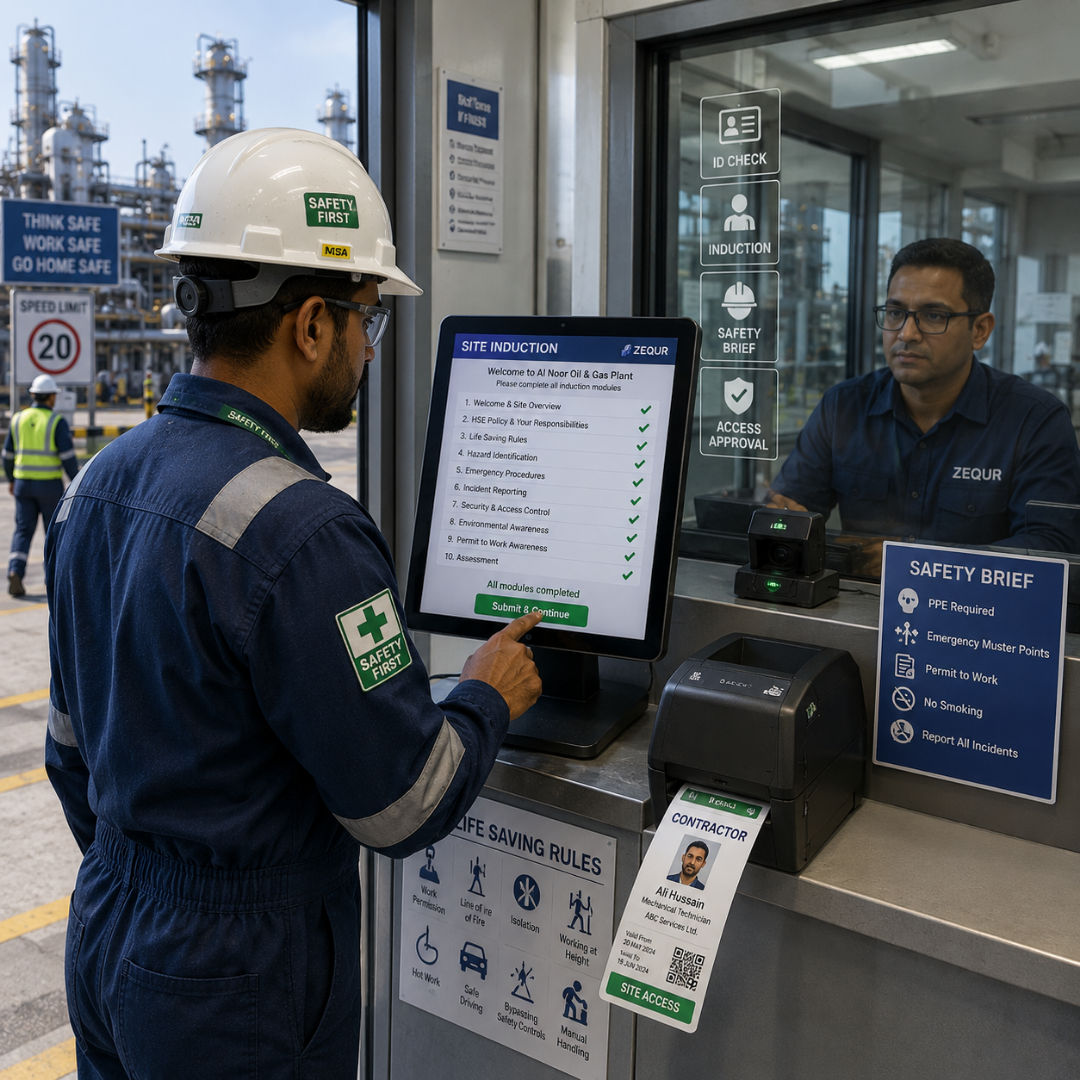
Onshore site — contractor visitor management
Contractor pre-registered via host portal; arrives at gate; QR scanned; induction status checked; badge prints with valid-from / valid-until + safety briefing reminder; AD-integrated audit trail.
Control-room digital signage
Operations dashboards across multiple screens; per-team RBAC; safety officer has sub-5-second emergency override; per-shift schedule with handover-time takeover.
On-prem AI document search
RAG against the operator's SOPs, engineering drawings, MSDS sheets; deployed on the operator's own GPU via vLLM / Ollama; no document leaves the perimeter.
Contractor compliance dashboards
Per-contractor induction status, certification renewal calendar, site-access audit log; surfaced to the contractor-management team via dashboard; export for HSE audit.
Deep dive — Zeour engineering for the oil & gas reality.
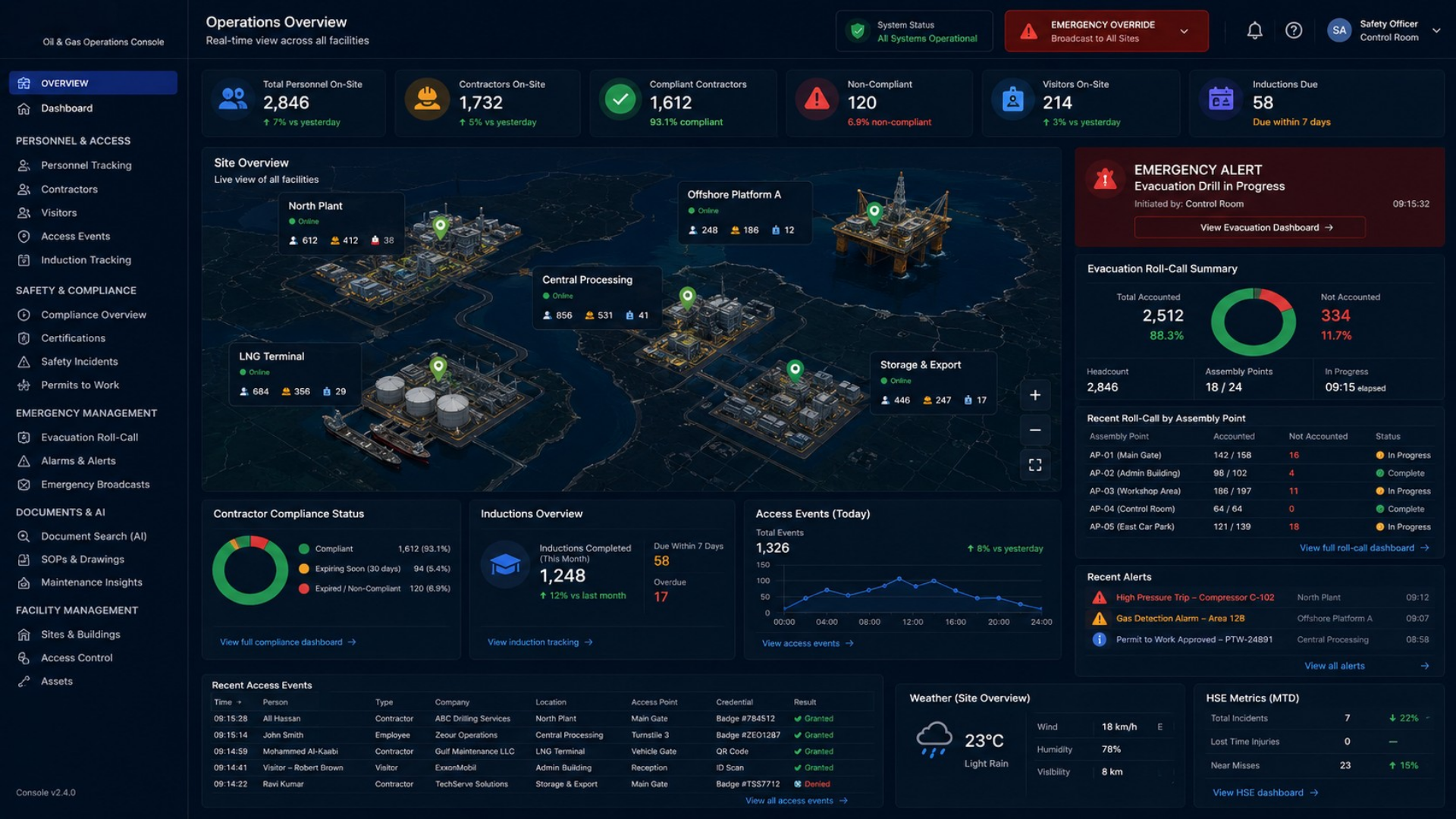
Sovereign on-prem AI without losing capability
The argument that "real AI value requires cloud APIs" is now wrong. Open-weight LLMs (Llama 3.x, Mistral, Qwen, DeepSeek) deployed via vLLM, Ollama or TGI on the operator's own GPU produce production-quality outputs for predictive maintenance, document search across SOPs and engineering drawings, control-room ops co-pilot, and contractor compliance review. The deployment runs entirely on the operator's perimeter — no document leaves, no embeddings are uploaded, no prompt is sent to a third party. The reference deployment is a single workstation-class GPU (RTX 6000 Ada or RTX PRO 6000 Blackwell, procured direct by the operator — Zeour doesn't resell GPUs) running a 13B or 34B parameter model; CPU-only mode runs at the 7B-parameter level for sites without GPU. RAG pipelines are built against the operator's own document corpus with the operator's own ACL applied at retrieval time. This is the only deployment pattern that clears the strictest oil-and-gas data-residency reviews; it's also the cheapest at scale because inference cost is fixed hardware, not variable per-token API spend.
Contractor induction compliance — from paper to single source
Site induction (OPITO BOSIET / FOET, regional equivalents, site-specific safety briefings) is the highest-leverage compliance surface. Visitor management at the gate ties each contractor record to current induction status; the gate refuses non-current inductions automatically. Site-specific briefings can be triggered at the kiosk for first-time visitors; the digital signature is captured with timestamp + biometric (where in production); the audit trail is append-only with denormalised actor snapshot. Renewal calendars are exposed to the contractor-management team via dashboard; the contractor receives reminders via the contact channel they prefer (email / SMS / WhatsApp). HSE auditors get a single export rather than chasing the operator's spreadsheets.
Control-room signage with safety-officer override
Operations dashboards across multiple screens with per-team RBAC; the safety officer has a sub-5-second emergency override that bypasses all scheduling and pushes to every screen via Socket.IO with priority. Per-shift schedule with handover-time takeover means the night-shift dashboard appears automatically at handover, no manual switch required. ClamAV antivirus on every upload; HMAC-signed media URLs; mandatory 2FA in cloud mode (for the operations team's management console, not the control-room screens themselves). HealingVideo HLS fallback and SmartPlay fallback chain mean screens never go blank — critical for a control room where blank screens are a regulatory event.
How an oil-and-gas engagement is structured
Phase 1 — Discovery: fixed-fee, 2–4 weeks, on-site at the operator's primary control room. Output: a written Statement of Work with binding per-site deployment dates and KPI thresholds. Phase 2 — Build: milestone-fixed, 8–12 weeks. Weekly demos; change-orders are explicit and priced; site-specific safety requirements integrated. Phase 3 — Pilot: 1 site over 4–6 weeks; AD integration live; induction tracking live; control-room signage live. Phase 4 — Roll-out: across the operator's site portfolio. Phase 5 — Operate or hand-over: 12-month operator-care with named SLAs, or a 90-day hand-over with the operator's own team taking over with the repo, licence and deploy keys. Operator self-sufficiency at exit is the design goal — no vendor lock-in.
Regional notes — what changes per market.
United Kingdom + European Union
OPITO BOSIET / FOET induction tracking, GDPR + UK DPA 2018, NCSC alignment, IEC 62443 alignment for industrial cybersecurity. Strong fit for North Sea and continental upstream + midstream operators.
North America
On-prem AI on operator hardware (open-weight LLMs deployed via vLLM / Ollama / TGI); contractor induction tracking aligned with the operator’s SHE programme; integration with US identity systems scoped per engagement.
GCC + MENA
PDPL alignment, sovereign on-prem deployment as the default, RTL Arabic shipping in the same build as English, integration with national identity systems where in production.
North Africa + Asia
Locale-aware UI, configurable currency formatting, fully air-gapped deployments common, on-prem AI on operator hardware.

Compliance frameworks
- ISO 27001
- PDPL
- NCSC alignment
- OPITO induction tracking
- IEC 62443 (industrial cybersecurity)
- Sovereign data residency
Active regions
- · United Kingdom
- · European Union
- · North America
- · GCC
- · North Africa
- · Asia
Questions oil & gas buyers always ask.
Oil & Gas deployments in production.
Talk to an engineer who has shipped this for oil & gas.
A 30-minute scoping call with the team that builds and operates Zeour — not a generalist account exec. We’ll walk your branch / site / network profile and give you a fixed-fee Discovery price by the end of the call.
Oil & Gas — concepts you'll meet
Definitions for the operational terms that appear across this industry page.