
Ministry of Health Kuwait — Queue Management Deployment
Outpatient patient flow at the Ministry of Health Kuwait clinic — citizen self-service kiosk, EMS06 keypads, LED counter displays and GRAVIA signage.
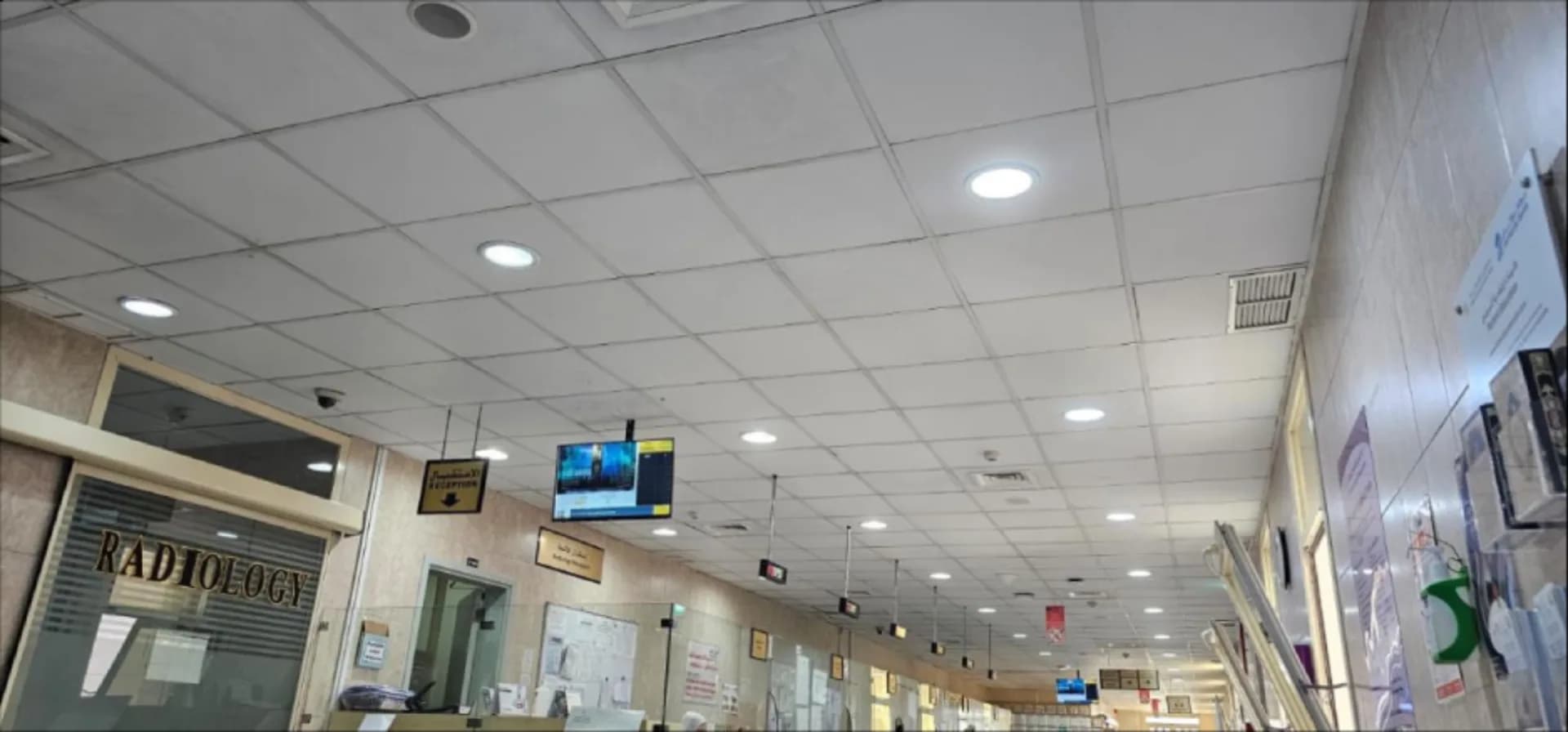
Ministry of Health, Kuwait
The Ministry of Health Kuwait operates a high-volume outpatient clinic where citizens arrive for general consultations, specialty referrals, vaccinations, lab sample collection and records requests. Outpatient patient flow is the dominant operational pain point — citizens arrive at peak hours, sit in crowded lobbies, and the perceived-wait metric drives the satisfaction score the Ministry reports publicly.
The Zeour stack at Ministry of Health, Kuwait
Zeour GLARUS queue management at the outpatient clinic with the full GLARUS hardware stack wired together: self-service kiosks at the lobby entrance where citizens choose the service they need (general clinic / specialty referral / vaccination / lab sample / records request) and take a ticket; EMS06 operator keypads at each consultation room where the clinician or receptionist calls the next patient; LED counter displays (SSD06) above each counter showing the called ticket number and counter ID at distance; GRAVIA signage in the main waiting area driving live queue position and bilingual announcements. Multilingual UI (English + Arabic with full RTL) on both the citizen-facing kiosk and the staff-facing keypad. PDPL-aligned and runs on-premise inside the Ministry's perimeter.
Phased engagement — Discovery → Build → Pilot → Roll-out → Operate
Discovery on-site at the outpatient clinic mapped each service pathway (general clinic, specialty referral, vaccination, lab sample collection, records request) to the right counter, the right keypad, the right LED counter display and the right GRAVIA signage layout. Build delivered the queue platform plus the integrated hardware stack — self-service kiosks at the lobby entrance, EMS06 keypads at each counter, SSD06 LED counter displays above each counter and GRAVIA signage in the main waiting area. Pilot ran with KPI thresholds agreed upfront and tested against the Ministry's existing patient-satisfaction reporting. Cutover was atomic — Friday end-of-day on the old paper-ticket process, Monday morning on the new system. Operate transitioned to the MoH IT team on a Care Plan with the documented goal of operator self-sufficiency at exit.
Operational outcomes the deployment enabled
Outpatient patient flow at the clinic is now per-pathway routed — the historical all-purpose FIFO queue replaced with service-specific counters that route patients to the right clinician without front-desk triage. Citizens self-serve their ticket at the lobby kiosk, watch the LED counters and GRAVIA signage for their number, and arrive at the correct counter when called from the EMS06 keypad. The crowded-lobby pattern that drove the Ministry's patient-satisfaction reporting downward is replaced with a predictable, signalled flow at calmer cadence. Bilingual EN+AR full RTL means both Arabic-speaking and English-speaking citizens see the same flow without language friction. On-prem deployment + PDPL alignment cleared the Ministry's data-residency requirement without further negotiation — citizen health data never leaves the perimeter.
Zeour solutions in production at Ministry of Health, Kuwait.
What this deployment delivered.
General clinic / specialty / vaccination / lab / records routed separately.
Self-service kiosks, EMS06 keypads, SSD06 LED counters and GRAVIA signage wired into one flow.
Citizen health data inside the Ministry perimeter; EN + AR full RTL.
Other production references close to this one.
Ranked by overlap on industry, country, region, and shared solutions deployed.

Talk to the engineers who shipped this.
A 30-minute scoping call to walk your operational profile against this reference, then a fixed-fee Discovery price by the end of the call.
Glossary — concepts in this deployment
Definitions for the operational terms behind this case. Open any chip for the full entry plus its cross-links across the site.