Key takeaways
- KSA ministries procuring visitor management in 2026 buy against five braided constraints: PDPL, NCA-ECC, NSDI data-classification guidance, WCAG 2.2 AA (mandatory for public-sector digital), and MoF procurement governance.
- Five distinct visitor populations need separate audit-defensible flows: citizens, recurring contractors under Saudi Labour Law, official delegations under protocol, accredited press, and diplomatic visitors.
- Bilingual Arabic + English with full RTL across every surface — kiosk, host portal, badge, signage, host SMS, audit export — is a build constraint, not a feature.
- Sovereign on-premises inside the ministry perimeter is the only posture that cleanly satisfies NCA-ECC + PDPL + NSDI together. Public-cloud SaaS for citizen-facing PII is hard to defend.
- Realistic 2026 GBP bands: Discovery £15k-£40k; Build £100k-£300k single HQ; Build £400k-£1.4M multi-ministry estate; per-HQ hardware £20k-£60k.
- The 14-criterion rubric below pastes directly into RFP scoring and the MoF procurement package. Each criterion ships with a verifiable test, not a vendor self-claim.
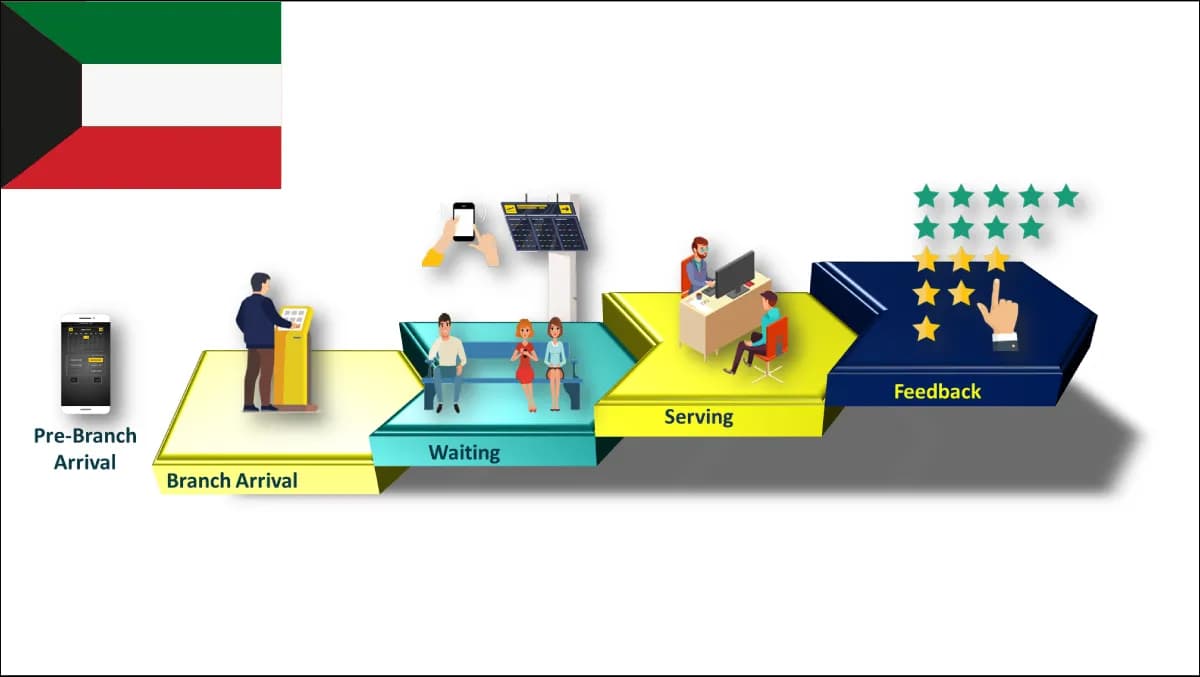
- Reference programmes for the same engineering posture: three Maltese government deployments plus a sovereign GCC ministry of health implementation in Kuwait.
If you are responsible for a ministry HQ or a multi-zone secure estate in Riyadh, Jeddah, Dammam or the wider Kingdom, your visitor management system is no longer a reception-desk tool. It is a Vision 2030 surface where citizen experience under the Quality of Life Programme meets the Government Digital Transformation Programme, and where every check-in must satisfy PDPL, NCA-ECC and the National Strategy for Data and AI in one go. This guide is how to procure that system in 2026 without buying a generic SaaS rebadge that fails its first NCA audit.
Who this guide is for
- Ministry facilities director. You own the building, the reception, the protocol lobby and four to twelve secure zones. You need one consistent host workflow in Arabic + English, accessible to disabled visitors.
- Ministry security director / CISO. You answer to NCA on the Essential Cybersecurity Controls baseline and Critical Systems controls where applicable. You need every visitor record traceable, every export logged, every integration architected so PII never leaves the perimeter.
- Head of protocol services. You handle delegations, accredited press and diplomatic visitors. You need workflows respecting protocol rank, bilingual ceremony, mandatory escort routing, and pre-arrival printed + digital visitor manifests.
- Programme director for Vision 2030 modernisation. Visitor management is one of fifteen line items across ministries. You need a vendor whose fixed-fee, phased engagement model and 90-day exit window match the MoF procurement framework and Vision 2030 budget cadence.
What is visitor management in 2026 — and why it's different for Saudi government?
A visitor management system is the software, hardware and operational policy that registers, identifies, badges, hosts, escorts, and audits everyone entering a facility who is not a permanent employee. In a Saudi ministry it sits at the intersection of national identity, cybersecurity baseline, accessibility statute, contractor labour law, and the government digital transformation portfolio.
The sectoral difference shows up first in visitor mix. Where a corporate HQ might run 80% pre-booked meetings, a ministry typically runs five overlapping populations on the same lobby floor. Registered citizens arrive for service appointments, often via the federal national identity gateway with a pre-verified token. Contractors arrive in rolling shifts for facilities, IT, catering, fitouts and projects — 300 or 400 a day on a major HQ — with Saudi Labour Law obligations on shift logging and right-to-work verification. Official delegations arrive with protocol officers requiring pre-published manifests, escort allocation, bilingual welcome signage on the digital signage system and a separate badge SKU. Accredited press arrive with embargo handling and recording-zone restrictions. Diplomatic visitors arrive with bilateral handling and may not be on any general database.
The regulatory shape is equally specific. PDPL governs every visitor's personal data and requires explicit consent, defined retention, lawful basis, and a Saudi-resident controller. The NCA-ECC baseline sets the cybersecurity controls the system itself must ship with: identity, asset, vulnerability, cryptography, physical security, third-party risk. The National Data Management Office under SDAIA classifies visitor data under NSDI guidance. MCIT regulates the underlying digital infrastructure, and the Authority for Universal Access mandates WCAG 2.2 AA for every public-sector touchpoint — lobby kiosk, host portal, badge layout, host SMS. Saudi Labour Law shapes the contractor-management side, where visitor logs become a defensible presence record.
Vision 2030 alignment makes the procurement consequential. The Quality of Life Programme reads ministry reception as a citizen-experience surface measured in minutes-to-host and accessibility rating. The Government Digital Transformation Programme reads it as a digital-channel surface measured in completion rate, paperlessness, and proximity to the federal national identity gateway. A visitor system bought against this rubric is a public-facing programme deliverable, not a back-office utility.
The KSA government VMS scoring rubric — 14 criteria
Use the 14 criteria below in your RFP scoring matrix. Each has a verifiable test you can apply at site visit + reference call + technical demo, not a vendor self-claim.
- 1Sovereign on-premises deployment in the ministry data centre. Why: PDPL + NCA-ECC + NSDI together push visitor PII into the ministry perimeter. Test: ask for a network diagram showing zero egress for visitor PII and a sovereign reference on a comparable government workload.
- 2Engineered bilingual EN + AR with full RTL across every surface. Why: Arabic is the first language of the visitor, the host and the audit team; English is the second-language baseline for diplomats, press and contractors. Test: demo the kiosk, host portal, host SMS, badge PDF, audit export and protocol manifest in Arabic RTL. Ask for the bilingual baseline.
- 3WCAG 2.2 AA accessibility on every visitor surface. Why: mandatory for KSA public-sector digital channels — failure is a procurement disqualifier. Test: request a conformance statement, run axe-core on the kiosk web view, observe a wheelchair-height kiosk demo and a screen-reader run on the host portal.
- 4NCA-ECC controls coverage. Why: the cybersecurity baseline ministries are graded on. Test: ask for a controls-to-features mapping covering IAM, asset management, cryptography, SDLC, vulnerability management, third-party risk, physical security and event logging.
- 5PDPL-aligned consent, retention and lawful basis. Why: every visitor record is personal data under PDPL. Test: show the consent moment in the kiosk flow, the retention schedule per visitor type, lawful basis capture and the data-subject access workflow.
- 6Five visitor-type workflows out of the box. Why: citizens, contractors, delegations, press and diplomats are the operating reality of a ministry lobby. Test: run each flow live; show separate badge SKUs, consent text, audit fields and signage layouts.
- 7Federal national identity gateway integration pattern. Why: citizens should not retype data the ministry already trusts. Test: ask for the gateway adapter, sample payload, on-ministry token validation and a reference ministry running it in production.
- 8Pre-booking via online appointment with Arabic-first booking UI. Why: the Government Digital Transformation Programme measures appointment-to-service journeys. Test: demo an online appointment system running Arabic-first, WCAG 2.2 AA conformant, with calendar export and reminder SMS.
- 9Lobby queue management integration for citizen-service ministries. Why: citizens attending visa, registration, permit and civil-status services need a structured queue. Test: show the linked QMS pulling appointment data into the queue and the wall display.
- 10Self-service kiosk with bilingual + accessible UI. Why: reduces lobby congestion and meets accessibility statute. Test: demo wheelchair-height kiosk with audio guidance, Arabic-first, screen-reader compatibility, ID scan, badge print, lanyard dispense.
- 11Wayfinding for multi-zone ministry estates. Why: most ministry HQs have four to twelve secure zones requiring bilingual directional guidance. Test: demo bilingual interior wayfinding respecting zone restrictions and escort-required flags.
- 12Visitor + contractor feedback loop. Why: the QoL Programme and Government Digital Transformation Programme both measure citizen sentiment. Test: demo customer feedback capture at lobby exit with sentiment dashboard and negative-score alerts.
- 13Saudi Labour Law contractor management module. Why: recurring contractors are workers; on-site logging is a defensible record. Test: show contractor right-to-work capture, shift logging, PPE checks, induction status and recurrence handling.
- 14MoF-procurement-compatible commercial structure. Why: MoF requires cost transparency, milestone-fixed delivery, change-order control and exit terms. Test: ask for fixed-fee Discovery, milestone-fixed Build, explicit change-order pricing, a 90-day exit window and an operator-owned repo + license + deploy keys clause.
How do you choose between on-premises, sovereign cloud, and public-cloud SaaS in Saudi Arabia?
For a Saudi ministry the operating answer in 2026 is sovereign on-premises by default. The table below shows the criteria a CISO + procurement officer will actually grade on.
| Criterion | Sovereign on-premises (ministry DC) | Sovereign cloud (KSA-region) | Public-cloud SaaS (multi-region) |
|---|---|---|---|
| PDPL alignment for citizen + contractor PII | Strong — data never leaves perimeter | Moderate — controller residency + processor governance must be evidenced | Weak — cross-border egress + sub-processor opacity |
| NCA-ECC controls evidencing | Direct — ministry owns the stack + the logs | Shared — CSP attestations + ministry compensating controls | Indirect — multi-tenant cloud control plane outside ministry visibility |
| NSDI classification + sovereignty | Clear — Saudi-resident data + Saudi-resident infrastructure | Acceptable for non-critical classifications when CSP is licensed | Difficult to defend for citizen-facing visitor data |
| Bilingual EN + AR with full RTL | Same engineering posture across deployments | Same engineering posture | Often retrofit — RTL gaps in non-MENA SaaS |
| WCAG 2.2 AA accessibility | Same — independent of deployment model | Same | Often retrofit |
| Air-gapped + secure-zone fit | Yes — designed for zero-egress operation | Partial — depends on CSP edge | No |
| Cost shape | Higher CapEx + lower OpEx; fixed-fee Build maps cleanly to MoF procurement | Mixed — CSP OpEx + integration CapEx | Subscription OpEx — re-licensing risk over Vision 2030 cycle |
Opinionated answer for a ministry: sovereign on-premises is the default. Sovereign cloud is acceptable for general-administrative workloads where data classification is lower + the cloud provider is properly licensed. Public-cloud SaaS should be reserved for non-PII surfaces only, if used at all. See /industries/government for the wider posture.
> Want a fixed-fee Discovery price before the end of the call? Talk to Zeour engineering — 30-minute scoping conversation, no slideware, and a published pricing band by the time we hang up.
How much does visitor management cost in Saudi Arabia in 2026?
Prices below are 2026 GBP bands based on Zeour's KSA + GCC government delivery posture and the typical scope of a ministry programme. Hardware is separable. Care Plan is separable. Discovery is always fixed-fee.
- Discovery (4-6 weeks, fixed fee). £15k-£40k. Site survey; five-visitor-type flow mapping; PDPL DPIA; NCA-ECC controls mapping; bilingual content audit; WCAG 2.2 AA baseline; integration scoping; published Build proposal at fixed price.
- Build — single ministry HQ. £100k-£300k. Five-flow configuration; bilingual content; accessibility hardening; integrations with national identity gateway, ministry directory, door-control and SMS gateway; host + protocol portal; kiosk firmware; signage + badge templates; UAT and on-site go-live support.
- Build — multi-ministry estate (shared sovereign infrastructure). £400k-£1.4M. HA cluster; DR posture; per-ministry rollout templates; identity-gateway hardening; cross-ministry reporting; phased rollout across three to twelve HQs over twelve to eighteen months. Maps cleanly to a Vision 2030 portfolio line item.
- Per-HQ hardware. £20k-£60k. Two to four wheelchair-height kiosks; two to six host workstations; badge printers and lanyards; protocol-lobby signage panels; door-control integration where required.
- Care Plan (annual, tiered). Standard / Critical / Sovereign — response time, RCA SLA, on-call posture, on-site visits and version cadence sized to ministry classification.
Where a single-vendor stack covers visitor management, queue management, online appointment, kiosks, wayfinding, signage and feedback together, expect 25-35% under buying each of the seven solutions individually from seven vendors. See the cross-cutting price logic on /pricing.
ROI calculator — build a defensible business case in 7 steps
Step 1 — baseline volumes
Count monthly visitors by type per HQ. A defensible mid-size baseline: 6,000-12,000 citizens, 4,000-9,000 contractor entries, 40-120 delegation visitors, 20-80 press, 10-40 diplomats.
Step 2 — baseline cost-per-visit
Reception staff time, paper-badge printing, sign-in book archiving, escort overhead, audit-export time, host re-work for failed check-ins. Typical KSA-ministry blended cost: £4-£9 per visit fully loaded.
Step 3 — quantify failure cost
NCA audit findings; PDPL data-subject access requests against paper records; lost contractor hours on paper induction; protocol embarrassment from a wrong delegation manifest. One avoided NCA finding can pay for a Build year.
Step 4 — new-state cost
After VMS go-live, cost-per-visit typically drops to £1-£2.50. Citizen self-service via kiosk lifts host capacity. Pre-booking via online appointment lifts completion. Bilingual digital signage reduces lobby congestion.
Step 5 — accessibility + compliance upside
WCAG 2.2 AA conformance, PDPL alignment and NCA-ECC coverage all enter the QoL Programme + Government Digital Transformation Programme scorecards. Programme directors should monetise rating uplift into the business case.
Step 6 — five-year TCO
Discovery + Build + hardware + Care Plan + internal operator time, compared to do-nothing TCO plus contingent cost of a PDPL or NCA finding. Crossover lands in months 14-22 for a single HQ; faster on multi-HQ estates where sovereign infrastructure amortises.
Step 7 — write the business case
Four pages, MoF-procurement format. Problem statement under Vision 2030; PDPL + NCA-ECC + NSDI + WCAG 2.2 AA scorecard; volume + cost baseline; Build scope + fixed fee; Care Plan + 90-day exit window; named programme owner. Reference the Maltese citizen-services programme, the finance ministry programme and the transport ministry programme for delivery cadence; reference the Kuwait ministry of health programme for an adjacent GCC sovereign deployment.
Seven failure modes from KSA government VMS deployments
1. Buying a generic SaaS app and retrofitting Arabic later. Non-MENA SaaS often treats RTL as a translation layer. Kiosk, badge PDF, host SMS and audit export end up half-translated. Treat the bilingual baseline as architecture from day one.
2. Treating WCAG 2.2 AA as a post-Build add-on. Accessibility is a procurement disqualifier, not a phase-2 feature. Retrofitting on closed kiosk firmware can cost more than the original Build.
3. Skipping the protocol flow because it is small-volume. Protocol visits are low-volume, high-stake. A botched delegation manifest gets reported up two levels. Score it as a first-class flow with its own templates, badge SKU, signage layout and escort allocation.
4. One workflow for contractors and citizens. Citizens have low-frequency, high-personalisation visits; contractors have high-frequency visits with Saudi Labour Law obligations on top. One workflow fails both. Insist on five-flow capability.
5. Public-cloud SaaS for citizen + contractor PII. Defending multi-region SaaS for ministry visitor PII on an NCA-ECC audit is hard. The next finding cycle catches it. Default to sovereign on-premises.
6. No federal national identity gateway integration. Asking a registered citizen to retype identity data is poor experience under the QoL Programme and a PDPL minimisation hazard. Integrate from Build day one.
7. No exit clause or operator-owned repo. A ministry stuck on a proprietary stack with no exit clause becomes a procurement risk at the next Vision 2030 budget cycle. Insist on operator-owned repo, license, deploy keys and a 90-day exit window — part of the fixed-fee engagement model that maps to MoF procurement.
Migration path
Phase A — discovery + baseline (weeks 1-6, fixed fee). Site survey; visitor-flow mapping; PDPL DPIA; NCA-ECC controls mapping; bilingual content audit; WCAG 2.2 AA baseline; integration scoping; fixed-price Build proposal.
Phase B — single HQ Build (months 2-6). Configuration; bilingual content; accessibility hardening; integrations with national identity gateway, directory, door-control and SMS; protocol portal; kiosk firmware; signage; UAT; on-site go-live; Care Plan.
Phase C — multi-HQ rollout (months 6-18). Shared sovereign infrastructure; per-HQ templates; phased rollout; federation; cross-ministry reporting; standardised protocol templates.
Phase D — operate + extend (month 18+). Steady-state under Care Plan; quarterly NCA-ECC + PDPL review; biannual WCAG 2.2 AA re-audit; extension into queue management, online appointment, wayfinding, signage and feedback. Ministry owns the repo, license, deploy keys; the exit window is live.
Implementation playbook
- 1Discovery. Fixed-fee, 4-6 weeks. Joint workshop; five-flow mapping; PDPL DPIA; NCA-ECC and NSDI mapping; WCAG 2.2 AA baseline; integration scoping; fixed-price Build proposal.
- 2Build. Milestone-fixed, weekly demos. Five-flow configuration; bilingual content packs; accessibility hardening; protocol portal; kiosk firmware; signage + badge templates; UAT.
- 3Integrate. National identity gateway adapter; ministry directory (LDAP/AD) sync; door-control integration; email + SMS gateway; signage CMS link; audit-log export pipeline.
- 4Pilot + go-live. Two-week pilot in one zone; staged rollout across the HQ; two weeks of on-site support post go-live; programme-director sign-off.
- 5Operate. Care Plan; quarterly compliance review; biannual WCAG 2.2 AA re-audit; monthly programme review; extension into adjacent solutions.
Frequently asked questions
Is sovereign on-premises actually required for a Saudi ministry, or is sovereign cloud sufficient?
Sovereign on-premises is the default for citizen + contractor PII in 2026 because the joint reading of PDPL + NCA-ECC + NSDI is cleanest when the ministry owns the perimeter, keys, logs and egress. Sovereign cloud is acceptable for lower-classification, non-PII surfaces when the provider is properly licensed; it is harder to defend for citizen-facing PII. Public-cloud multi-region SaaS for visitor PII is the configuration we would not procure.
How does Zeour map to NCA-ECC controls specifically?
During Discovery we produce a controls-to-features mapping covering the relevant ECC domains: identity + access management (host MFA, SSO, least privilege), asset management, cryptography (at rest + in transit), SDLC, vulnerability management, third-party risk, physical security of kiosks and host workstations, and event logging into the ministry SIEM. It ships with the published Build proposal so the CISO has it before procurement.
Is WCAG 2.2 AA actually mandatory in KSA public-sector procurement?
Yes. The Authority for Universal Access and wider public-sector digital procurement guidance require WCAG 2.2 AA conformance for every public-facing digital touchpoint — lobby kiosk, host portal, badge layout, host SMS, appointment UI and wayfinding signage. Score it as criterion 3 of 14.
How do you handle delegation and diplomatic visitors who are not in any database?
Protocol officers pre-load delegation manifests through a dedicated portal, allocate escorts, choose badge SKU and lanyard colour, and publish the bilingual welcome to the protocol-lobby signage ahead of arrival. Diplomatic visitors are handled outside the citizen + contractor databases with bilateral data-handling rules captured in the audit log. PDPL lawful basis is recorded per visitor.
What is the integration story with the federal national identity gateway?
We ship a Saudi national identity gateway adapter that lets a registered citizen arrive with a pre-verified token, validates it inside the ministry perimeter, and pulls only the minimum data set required for the visit. PDPL minimisation is honoured. A reference deployment is available on a CISO-to-CISO call.
How does Zeour handle Saudi Labour Law contractor management?
Contractors are a distinct visitor type. The system captures right-to-work fields, contractor company, shift start + end, PPE compliance, induction status, and recurrence for shift-pattern contractors. The audit log becomes a defensible Saudi Labour Law record. Companion: the enterprise visitor check-in workflow playbook.
Can the visitor manifest be published in bilingual Arabic and English on the protocol-lobby signage?
Yes — the protocol portal pushes the bilingual welcome to digital signage in the lobby and across wayfinding panels en route. Templates are configurable per ministry brand book. RTL Arabic is the first language; English sits beside it.
How does Zeour's commercial model fit MoF procurement governance?
Discovery is fixed-fee. Build is milestone-fixed with weekly demos. Change orders are explicit and priced. Care Plan is tiered with named SLAs. The ministry owns repo, license and deploy keys. A 90-day exit window is contractual. This is the fixed-fee engagement shape MoF teams find easy to defend.
Do you have references from comparable government programmes?
Three Maltese government programmes give the closest delivery analogue at programme scale: front-line citizen services, the finance ministry and the transport ministry. Within the GCC, the Kuwait ministry of health programme is the closest sovereign-deployment reference. CISO-to-CISO references are arranged at Discovery.
What does a typical sovereign VMS programme look like over Vision 2030?
Discovery (4-6 weeks) → single-HQ Build (months 2-6) → multi-HQ rollout under shared sovereign infrastructure (months 6-18) → Care Plan steady-state with quarterly compliance review and biannual WCAG 2.2 AA re-audit. Extension into queue management, online appointment, self-service kiosk, wayfinding, signage and customer feedback follows the business case. Companion guides: the horizontal compliance buyer's guide, the enterprise workflow playbook and the sibling KSA government queue management buyer's guide.
Where Zeour fits
Zeour Ltd is a UK-registered enterprise platform vendor shipping a 13-solution portfolio engineered for sovereign on-premises, bilingual Arabic + English full RTL, WCAG 2.2 AA accessibility, and a fixed-fee, phased engagement model with a 90-day exit window. Our portfolio spans 460+ branches in 6+ countries. Scoping a visitor management programme for a Saudi ministry — talk to engineering, see pricing, or read the government posture.
--- Last updated: May 18, 2026 — by the Zeour engineering team.